Tuesday, February 5, 2019

Review: Cinder

Cinder Cinder by Marissa Meyer
My rating: 4 of 5 stars

Initially I didn't really want to read this book as the idea of a story about a cyborg girl didn't really seem that appealing to me, but it was one of our options for our series fiction module in my YA Lit class. I initially chose to read Shusterman's Unwind instead, but decided since I had heard many people mention this series I would at least check the book out and flip through to get more familiar with it. I read the first couple of chapters, and then I couldn't put it down! I ended up being very suprised by how much I liked it.

Even though this is sci-fi, it really is so much more. This story of a cyborg named Cinder with an unknown past trying to make her way in the world has a little bit of everything: family drama, bigotry, action, international intrigue and threats of war, romance, and death; the fairytale feel and "magical" abilities of some people in the story will also appeal to the fantasy lovers.

I loved how Meyer used the classic fairytale of Cinderella as the inspiration for this story, but interpreted it in such a creative and different way (the same is true for the rest of the books in the series). Cinder has no memory of her life before she woke up as an 11-year old cyborg, or the accident that resulted in her being so severly injured that extreme scientific intervention was necessary to save her. She was adopted by a man who died of a new mysterious and deadly plague before he could tell her anything about her past, leaving her with a stepmother who resents her, and two stepsisters, only one of whom accepts Cinder.

There is a prince, and a ball. But there is also the threat of war with the Lunars, the population descended from a colony on the moon thousands of years early. The Lunar people have mutated and evolved to have the ability to control peoples moods, emotions, and perceptions, which is how the cruel royal family has maintained tight control over the Lunar population. But now, Queen Levana is not content just to rule the moon, and has set her sights on Earth, though there are rumors of a missing princess who could usurp the throne. In addition, the deadly plague that killed Cinder's adoptive father years earlier continues to spread, and has now infected her youngest sister Peony.

While one significant part of the story is very predictable, so predictable it may be intentional, I found this unique re-telling of Cinderella to be interesting, relatively fast-paced, with good character development, and I think it could appeal to a wide audience. Even though it is technically sci-fi, the focus is more on the people than the science, and though Cinder is a cyborg, and her technology does play a significant role at time, the focus is really on her humanity.

View all my reviews

Sunday, February 3, 2019

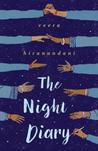
Review: The Night Diary

The Night Diary The Night Diary by Veera Hiranandani
My rating: 4 of 5 stars

This is told in diary form, with each entry written as a letter from a young Indian girl to her mother, who died shortly after giving birth to her and her twin brother. Set in 1947 amidst the horrible violence that broke out among the different religious factions (Muslims, Hindus, and Sikhs) in India after English rule ended and India was divided into Pakistan, set aside as a homeland for the Muslims, and "New" India for the Hindus, Sikhs, and everyone else. The caused a mass migration as Sikh and Hindu families, like Nisha's, had to leave their homes in what was now Pakistan, as Muslims moved in, and violence ensued, with many deaths.

This is a very moving story that will leave the reader shaking their head in disgust at all the senseless fighting and killing over religion. It is well-written and well-paced, and the relationship between Nisha and the family's cook, Kazi, is particularly touching. My only real criticism is that much of the time the writing was too flowery and lyrical, too mature and sophisticated to be convincing as the voice of a 12-year old, and sounded more like an adult remembering and describing events that happened when they were a child, that being written as they happened by a child. It did not bother me overmuch, except in a couple of places, but I do wonder if that would make it less accessible and relatable to children.

I would recommend this to those interested in historical fiction and learning what it is like for other children who have lived through such conflicts, ages 10-14.

View all my reviews

Saturday, February 2, 2019

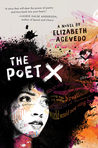
Review: The Poet X

The Poet X The Poet X by Elizabeth Acevedo
My rating: 5 of 5 stars

Like most books in verse, this one took me a little bit to get into, but once I did I couldn't put it down.

Xiomara is the teenage daughter of Dominican immigrants who are very strict and conservative, with her mother being devoutly relgious to the extreme. Xiomara's mother's religious zealotry causes her to be completely close-minded, controlling, and even cruel in the way she treats Xiomara, whose only "crime" has been being unable to stop her body from developing voluptuous curves that attract unwanted attention from boys and men. Xiomara has no voice at home, and instead pours all her feelings into her journal and her poetry. Eventually things reach a breaking point, triggered by her mother catching her kissing a boy, and skipping church to go to poetry club.

This book reminds me of a some others I've read, Gabi: A Girl In Pieces, I'm Not Your Perfect Mexican Daughter, and Love, Hate & Other Filters, which all feature daughters struggling to find their own identity and live their own lives under the weight of their parents' expectations, control, and obsession with them being "good girls". While these stories happen to feature Latino or Muslim families, I can attest to the fact that this type of repressive and controlling parenting of girls can happen in families of any ethnicity, culture, or religion. Though it was never taken quite to the extreme as in these stories, I grew up in a similar environment were daughters were treated as someone subservient and needing to be kept under strict supervision and tight control so they didn't become "bad girls" and go out and get a bad reputation or get pregnant.

Though I'm no poet, I could strongly identify with Xiomara's feeling like she had no voice, no identity as an individual within her home, and feeling like no one saw her for who she was, or even wanted to. In some ways, I still feel that way. I also related to her twin Xavier's feeling of just trying to lay low and suffer through until they could leave for college. My heart ached for both of them, being unable to express their true selves, and to be loved and accepted for who they were. I found myself getting so angry at the mother, but was pleasantly suprised to see their priest be the voice of reason, reminding her mother that anger and cruelty were sins as well, and encouraging Xiomara to keep asking questions and seeking answers until she was satisfied.

I think all teenagers (or people who have been teenagers) can relate to sometimes feeling like that have no voice, feeling the pressure of others' expectations, and many teen may deal with major conflicts with parents, particular when cultural and religious beliefs are extremely conservative, repressive, and fundamentalist, so this story could appeal to a wide audience.

View all my reviews

Thursday, January 31, 2019

Review: Unwind

Unwind Unwind by Neal Shusterman
My rating: 4 of 5 stars

I've been wanting to read this for a couple of years, since my manager first told me about it, and thankfully it was on the reading list for my YA Lit class. The story is set slightly in the future, after a second civil war, this time over abortion, which was ended with a bizarre compromise. Babies would no longer be aborted, but at any time between the ages of 13-18 if parents decided they didn't want them, then could have them "unwound", which is basically chopping them up for spare parts and recycling them. The arguement was that in this way, they did not actually die, they went on living in the bodies of other people, and helped others who were sick or injured. In addition, families with 10 children were encourage to give up a child for unwinding as a tithe, which was considered an honor rather than a punishment. [Another odd part of the compromise was that babies could be "storked", or dumped on a doorstep and those that found them were obligated to adopte them, which sometimes resulted in neighbors playing "hot potato" with the poor baby until it died of neglect.]

At the time I first heard of this book, it had a bit of a morbid appeal, as I was dealing with an extremely difficult teenager, who was very rebellious, irresponsible, and getting into all kinds of trouble, much like the main character whose parents have finally reached their limit and sign the order to have him unwound (which cannot be rescinded). Connors only option is to escape, and ends up taking Lev, a tithe who is first angry for Connor interfering in his destiny, and Risa, a ward of the state destined to be unwound simply because she isn't special enough for the state to justify spending any more money on her support and education. Later they meet Hayden, whose parents ordered him to be unwould just to spite each other during a messy divorce. The story follows the trio as they try to escape and stay hidden until they are 18.

I really enjoyed this book, it is well-written, well-paced, and has excellent character development, and we see the characters grow and change as the story progresses. The plot reminded me of an episode of the modern Twilight Zone re-boot from 2002 that starred Amber Tamblyn (of Joan of Arcadia and Sisterhood of the Traveling Pants) as a rebellious teen whose parents have decided to take the drastic action of moving to a walled community called Evergreen Estates that is supposed to be super family-oriented, promote family values, and curb teenage rebellion (i.e. non-conformity). As it turns out, the way they do this is by executing the rebellious teens and turning them into fertilizer that the family uses to plant a tree "in their honor" (in a nod to the series in which Tamblyn was starring at the time, the fertilizer company was named Arcadia).

This book will likely spark feelings of anger and outrage at how these teen's lives could be so casually taken, and sometimes for such trivial reasons. The scene that describes the "unwinding" of a boy from his perspective (because they keep them conscious!) is very disturbing. This book also brings up questions about life and death and who has the right to decide and when, that may be uncomfortable for some to consider.

I would recommend this for ages 14 and up, for readers who are not intimidated by long books, who tend to like adventure, survival, and dystopian themes, and can handle the overall dark and morbid premise.

View all my reviews

Sunday, January 27, 2019

Review: Lifeboat 12

Lifeboat 12 Lifeboat 12 by Susan Hood
My rating: 5 of 5 stars

Great book! Perfect for those who love stories about kids overcoming and surviving desperate situations.

Set in England at the beginning of WWII, this a fictionalized account of the experiences of then 13-year old Kenneth Sparks, who spent 8 days adrift in a lifeboat along with 5 other boys, one woman, and a number of crewman after the ship that was supposed to be taking the children to safety in Canada was sunk by a German U-boat only a few days after leaving port.

Written in free verse, the story draws the reader in and continues at a faily quick pace, with the rhythm, font, and word placement on the page helping to convey the mood and actions at points in the story. It is a fairly quick read, and while the background story is very tragic (only 13 of the 90 evacuated children on the ship survived), this story focuses on the miraculous survival of Lifeboat 12, so while there are sad parts, it should not be too much for most middle-grade/younger YA readers.

The author did extensive research, including interviewing the real Ken Sparks, and has included a great deal of factual information an extensive bibliography of source/resources in the end notes, as well as photos.

I would recommend this to any young readers from ages 10-14 who are open to books in verse and enjoy history, adventure, or survival stories, particularly fans of The War That Saved My Life, Refugee, or Hatchet.

View all my reviews